What an ancient Hebrew word teaches us about knowing God, surrendering to His will, and Mary’s fiat.
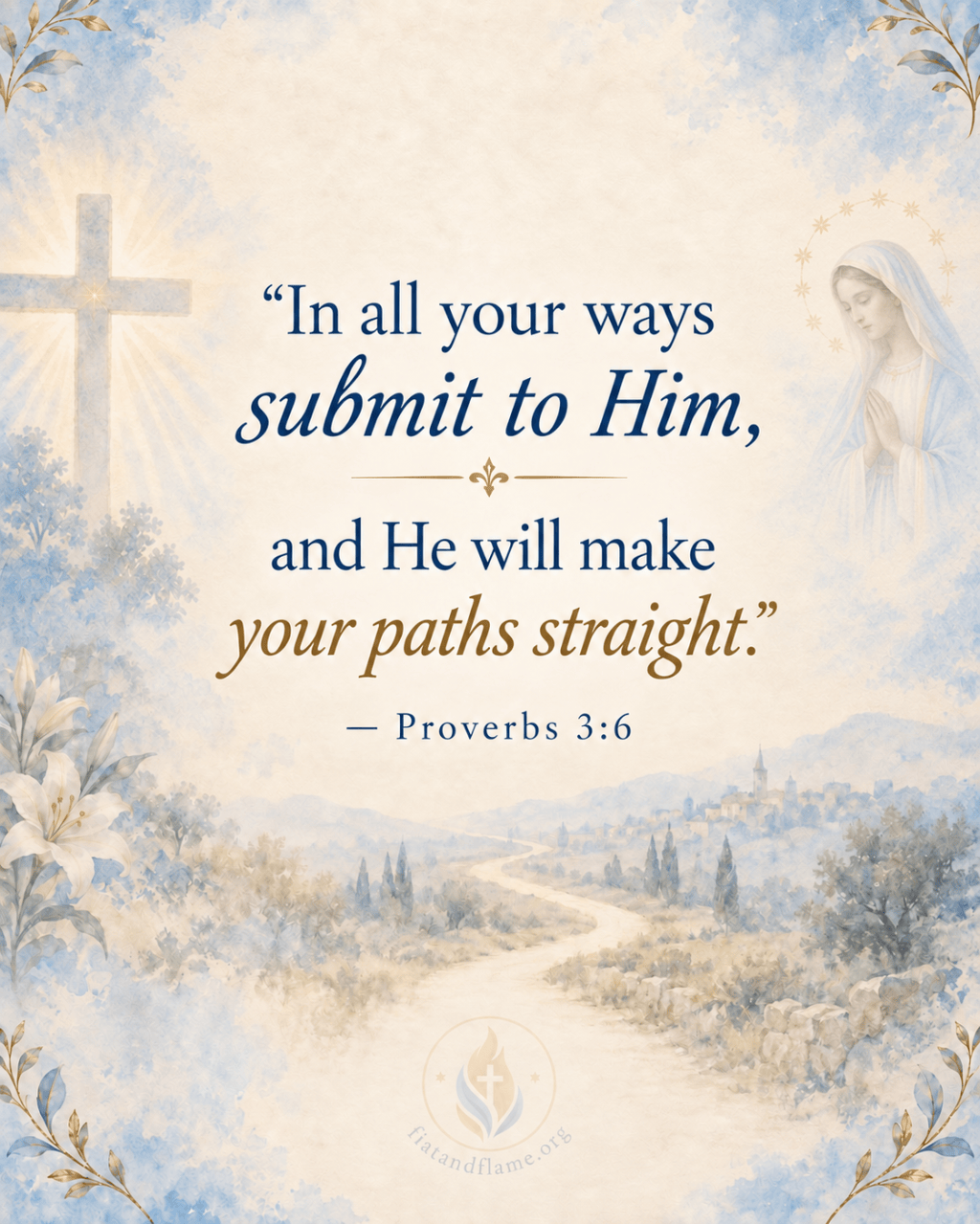
“In all your ways submit to him, and he will make your paths straight.” — Proverbs 3:6 (NIV)
There is something particularly meaningful about the word submit in this familiar passage. Other translations tell us to acknowledge God, be mindful of Him, or think upon Him. Each expresses an important aspect of our relationship with God, but submit seems to ask something more of us. It moves us beyond simply recognizing God’s presence to allowing Him to direct our lives.
Interestingly, the original Hebrew word used in this verse is not a word that literally means submit. It means to know.
Understanding how knowing God becomes submitting to Him reveals something profound about faith, obedience, and the example of the Blessed Virgin Mary.
Yada: A Different Kind of Knowing
The Hebrew word in Proverbs 3:6 is yada (יָדַע), pronounced yah-DAH. Its basic meaning is to know, but its use throughout Scripture encompasses much more than intellectual knowledge. Depending on the context, it can mean to recognize, understand, experience, or acknowledge someone.
When applied to our relationship with God, this knowledge carries implications for how we live. Knowing God means recognizing who He is and responding appropriately to His authority.
Consider the difference between knowing about someone and truly knowing that person. We can know a great deal about God through Scripture, theology, and the teachings of the Church. We can understand His commandments, recognize His attributes, and profess our belief in Him. Yet we can possess all this knowledge while continuing to rely almost entirely on our own judgment.
To know God in the sense expressed by Proverbs is to recognize His presence and authority in every aspect of our lives.
The New American Bible, Revised Edition, expresses this beautifully by inviting us to be mindful of Him in all our ways. The NIV takes the implication a step further by choosing the word submit. Neither is a strictly literal rendering of yada, but both communicate aspects of what it means to know God as Lord.
The distinction is important. The Hebrew word does not make knowing and submitting identical. Rather, the passage teaches us that genuine recognition of God should lead us to trust and obey Him.
When Knowing Becomes Submission
Think about the people in your life whom you trust most deeply. Perhaps it is your spouse, a longtime friend, or someone who has consistently demonstrated wisdom and faithfulness. You trust their judgment because you know their character. Their advice carries weight because experience has taught you that they can be trusted.
Our relationship with God develops through something similar, although His faithfulness and wisdom are perfect in a way that no human relationship can be.
As we come to know God through Scripture, prayer, the sacraments, and our experience of His faithfulness, we learn to trust Him more completely. We become increasingly willing to follow His direction, even when it conflicts with our preferences or when we cannot see where He is leading.
This is why Proverbs 3:6 cannot be separated from the verse immediately preceding it:
“Trust in the LORD with all your heart and lean not on your own understanding.” — Proverbs 3:5 (NIV)
The two verses describe a relationship in which knowledge, trust, and surrender belong together. We recognize God’s wisdom, trust His character, and allow that trust to guide our decisions.
Submission, understood in this way, is not passive resignation. It is an active choice to place our confidence in God rather than insisting on our own understanding.
And nowhere do we see this more beautifully demonstrated than in Mary’s fiat.
Mary’s Fiat: Knowing God Without Knowing the Path
When the angel Gabriel appeared to Mary and announced that she would conceive and bear the Son of God, Mary was presented with something that exceeded ordinary human understanding.
She asked a reasonable question: “How can this be?”
Gabriel explained that the Holy Spirit would come upon her and that the child would be called the Son of God. Yet Mary was not given a detailed explanation of everything that would follow. She did not receive a description of the flight into Egypt, the years of raising Jesus, His public ministry, or the suffering she would eventually witness at the foot of the Cross.
Nevertheless, she responded:
“Behold, I am the handmaid of the Lord. May it be done to me according to your word.” — Luke 1:38 (NABRE)
This is Mary’s fiat, her willing consent to God’s will.
Mary did not need to know every detail of the path before agreeing to walk it. Her response was grounded in faith in the God who had called her.
Here we find a beautiful connection to the Hebrew meaning of Proverbs 3:6. Mary knew God, recognized His authority, and entrusted herself to His will. Her knowledge of God was expressed through her submission to Him.
Her fiat was neither blind obedience nor an abandonment of reason. She listened, questioned, received an answer, and freely gave her consent.
The Catechism of the Catholic Church describes Mary’s response as the obedience of faith. In paragraph 148, it presents her as the purest realization of this obedience, someone who trusted that nothing would be impossible with God.
She did not understand everything that would happen, but she trusted the One who was asking.
What Does It Mean for God to Make Our Paths Straight?
There is another important dimension to Proverbs 3:6. We may be tempted to interpret God’s promise to make our paths straight as an assurance that our lives will become easier once we submit to Him.
Mary’s life reminds us otherwise.
Her willingness to follow God’s will did not spare her suffering, uncertainty, or sorrow. The path she accepted led her all the way to Calvary, where she stood beneath the Cross of her Son.
Yet she remained faithful.
The straight path promised in Proverbs is not necessarily a comfortable or uncomplicated life. It is a life directed by God’s wisdom rather than governed entirely by our limited understanding.
Mary’s journey illustrates that trusting God does not require us to see the entire road ahead. It requires us to remain faithful to Him as the road unfolds.
Living Our Own Fiat
Every day presents opportunities to practice the kind of trust described in Proverbs. We encounter decisions we cannot fully anticipate, circumstances we cannot control, and situations that challenge our understanding of what God is doing.
Our natural response is often to seek greater certainty. We want to know the outcome before committing ourselves to a particular course of action. We want reassurance that our decisions will lead somewhere desirable and that our sacrifices will make sense.
But perhaps the more important question is whether we are coming to know God well enough to trust Him with what we do not know.
This is where Mary’s fiat becomes an example for our everyday lives. Her response invites us to cultivate a relationship with God in which surrender grows naturally from trust.
We can begin by bringing Him into our ordinary decisions, examining our motivations in prayer, seeking His guidance through Scripture and the teachings of the Church, and remaining attentive to the ways He calls us to love and serve others.
Sometimes submission will require courage. Sometimes it will require patience, humility, or the willingness to relinquish a cherished plan. And sometimes it will simply mean remaining faithful to the responsibilities already before us.
The more intimately we come to know God, the more confidently we can entrust our lives to Him.
Perhaps this is the invitation hidden within that ancient Hebrew word, yada: to know God so deeply that trusting Him becomes the foundation of how we live.
Mary’s fiat shows us what that trust looks like when it becomes action. She placed her life in God’s hands without demanding to know every step ahead.
And in our own lives, we are invited to do the same.
“In all your ways submit to him, and he will make your paths straight.” — Proverbs 3:6
Fiat & Flame Ministries
fiatandflame.org


Leave a Reply